

PREVIOUS
✖
1952 Elections in Madras State
March 14 , 2026
14 hrs 0 min
75
0
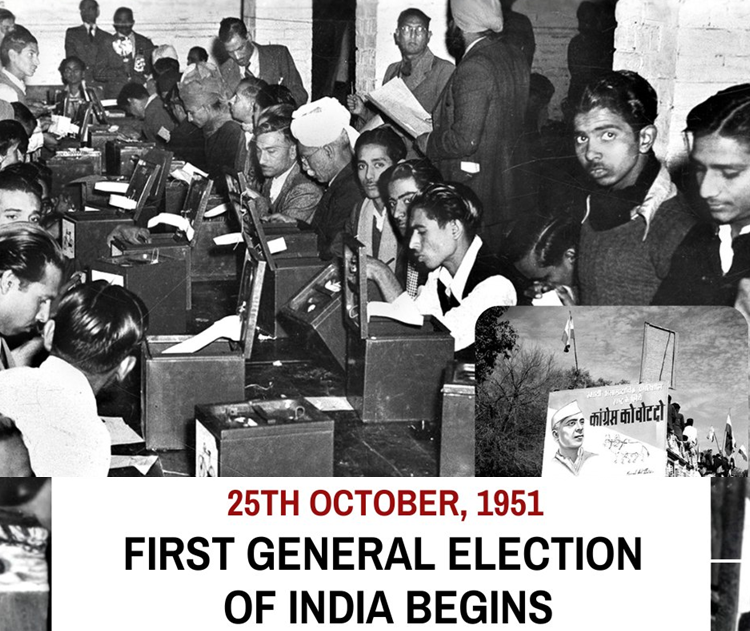
- In the first elections held in 1951-52 after the country became a Republic with the system of a universal adult suffrage in place, the major contestants were the Congress and the Communist Party of India (CPI).
- Despite the Congress having its State-level units established on linguistic lines such as the Andhra Committee and the Kerala Committee for over 20 years, the State of Andhra had not yet come into being.
- The leadership of the Congress, which was sympathetic to the idea of States on linguistic lines, did not, however, take a categorical stand in favour of it.
- Leaders including C. Rajagopalachari or Rajaji were against the idea.
- They held the view this would lead to fissiparous tendencies in the country.
- They found it then extremely difficult to come to terms with the reality after Partition.
- Rajaji had argued that the “mix of languages and cultures” had been Tamil Nadu’s (then called Madras) strength.
- And if divided on the basis of language, the province, “once so big and important and progressive, will hereafter grow narrow-minded and intensely anti-culture”.
- The sitting Chief Minister P.S. Kumaraswami Raja (secured an overwhelming majority in 1946), and most of his Ministers lost in the then elections.
- So, a hung Assembly came up.
- In the House of 375 members, the Congress obtained 152 seats only but it remained as the single largest party.
- The CPI, which finished second, garnered 62 seats.
- It was in Chennai that the CPI had announced its decision to contest the election.
- And A.K. Gopalan, one of the towering leaders of the Left movement, made the announcement
- However, the Congress party had managed to have its representative – Rajaji as Chief Minister, despite not getting a majority of its own.
- In 1952, the then Governor, Sri Prakasa nominated C. Rajagopalachari (C.R. or Rajaji) to the Legislative Council.
- It was under the constitutional provision allowing the nomination of individuals with special knowledge or practical experience in fields such as literature, science, art, the cooperative movement and social service.
- That time CR had actually retired from active politics.
- Rajaji was the only Indian to have served as Governor-General of India and accepted the Chief Minister’s post.
- The nomination of Rajaji alone had raised a political storm.
- Because he had subsequently been appointed Chief Minister of the State, which had then encompassed parts of Andhra Pradesh, Karnataka and Kerala.
- The issue that continues to be debated is whether a Council of Ministers, who are in office during the period of transition after an adverse popular verdict, can recommend to the Governor for filling vacancies in the legislative House.
- And whether the Governor can act in favour of such a recommendation.
- Given such a fractured verdict, the Governor added fuel to the fire by inviting Rajaji.
- Rajaji became the leader of the Congress legislature party on March 31, 1952, to form the government.
- A surprise inclusion in the Rajaji Cabinet was the Commonweal Party’s leader M. A. Manickavelu Naicker.
- By the time the Assembly was constituted in the early May, the strength of the Congress rose to 165.
- The practice that came into vogue subsequently is that no incumbent government, as soon as the model code of conduct for the Assembly election comes into force, takes any policy decision.
- If it is to take any such decision on account of exigency, it has to seek the Election Commission’s nod.
- That way, Tamil Nadu having been responsible for the formulation of the practice.
Leave a Reply
Your Comment is awaiting moderation.