

PREVIOUS
✖
Berkeley Earth Report
January 22 , 2026
14 hrs 0 min
17
0
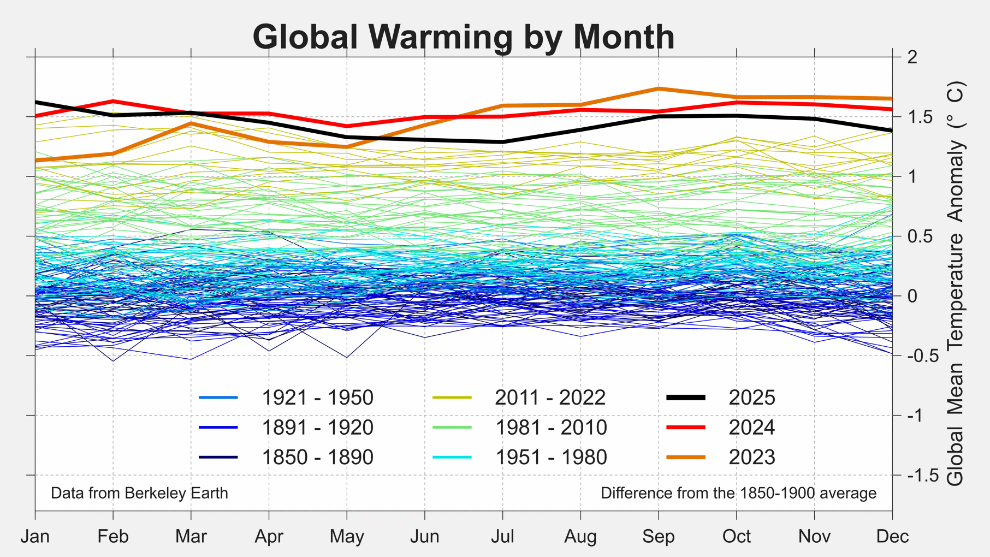
- Berkeley Earth’s annual temperature report found that 2025 was the warmest La Niña year on record.
- La Niña is the cooler phase of the El Niño Southern Oscillation (ENSO), which usually lowers global temperatures.
- ENSO is a natural phenomenon caused by fluctuating ocean temperatures in the equatorial Pacific, linked with atmospheric changes called the Southern Oscillation.
- During La Niña, trade winds strengthen, pushing warm water west and allowing cold water to rise in the eastern Pacific.
- In India, La Niña generally brings normal to above-normal monsoon rains, colder winters in northern regions, and higher risks of floods and cyclones in the Bay of Bengal.
- The opposite phase, El Niño, weakens trade winds, warms the eastern Pacific, weakens monsoon rains, triggers droughts, and causes hotter summers.

Leave a Reply
Your Comment is awaiting moderation.