

PREVIOUS
✖
China’s EAST Fusion Reactor
January 19 , 2026
15 hrs 0 min
22
0
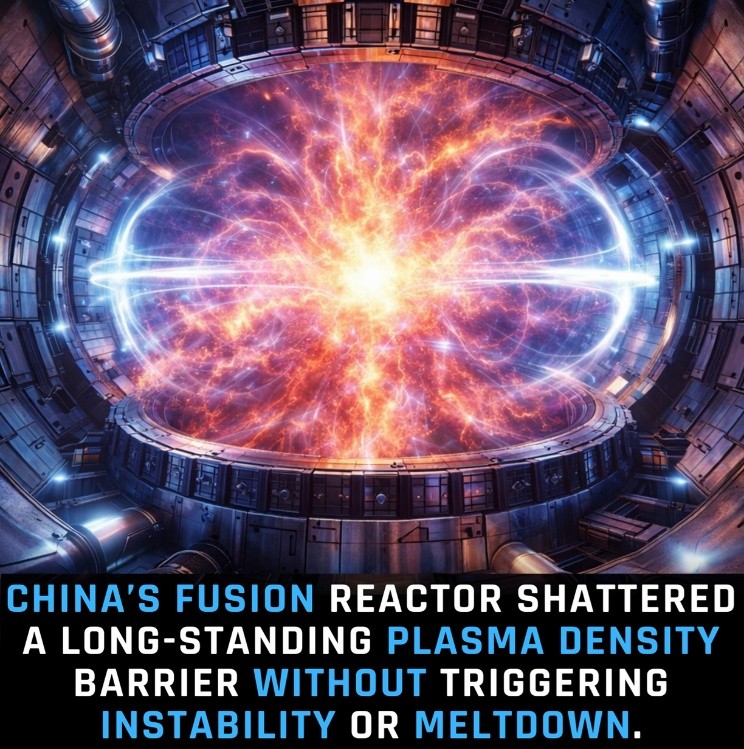
- China’s EAST (Experimental Advanced Superconducting Tokamak) fusion reactor surpassed the Greenwald density limit, a key barrier in nuclear fusion research.
- Nuclear fusion produces energy by fusing hydrogen nuclei into helium, similar to the Sun’s process.
- The Greenwald density limit defines the maximum plasma density a tokamak reactor can safely sustain.
- China’s EAST reactor achieved a plasma density about 65% higher than the Greenwald limit.
- A tokamak is a doughnut-shaped magnetic device used to confine superheated plasma.
- The breakthrough was enabled using Electron Cyclotron Resonance Heating (ECRH) and lithium-coated tungsten walls.
- The achievement has implications for ITER (International Thermonuclear Experimental Reactor), a global fusion project with India as a partner.

Leave a Reply
Your Comment is awaiting moderation.