

PREVIOUS
✖
Great Dyke of Zimbabwe
May 8 , 2026
15 hrs 0 min
12
0
- NASA scientists discovered a hidden 2.5-billion-year-old internal structure inside the Great Dyke of Zimbabwe using satellite imaging and geophysics mapping.
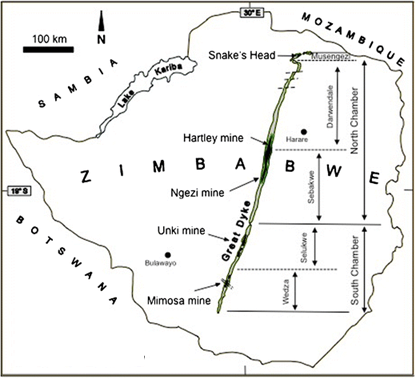
- The Great Dyke is a 550-kilometre-long igneous rock formation located in central Zimbabwe.
- It is classified as a lopolith, which is a saucer-shaped igneous intrusion formed from cooled magma.
- The structure is believed to be linked to an ancient magma storage zone from the Archaean Eon.
- The Great Dyke contains important minerals such as platinum, chromium, nickel, copper, iron, titanium, vanadium, and tin.

Leave a Reply
Your Comment is awaiting moderation.