

PREVIOUS
✖
Japan's Active Volcano - Kikai Caldera
August 2 , 2026
9 hrs 0 min
23
0
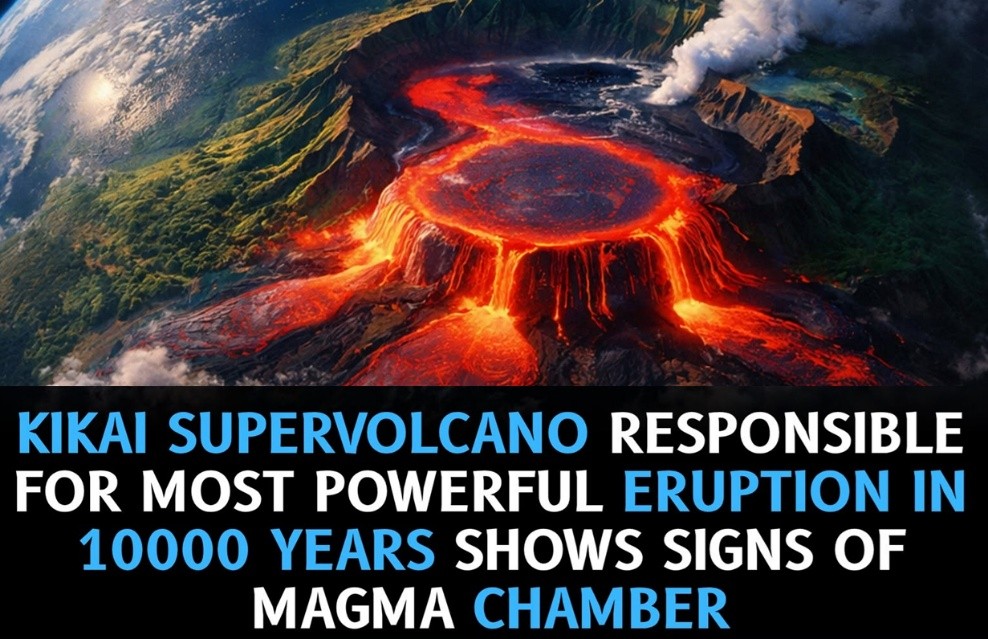
- Scientists have observed that a magma reservoir beneath Japan’s Kikai Caldera is filling again, providing insights into how large volcanoes recover after major eruptions.
- Kikai Caldera is a massive submarine caldera located in the East China Sea, south of Kyushu Island, Japan.
- The caldera has a diameter of about 19 kilometres and includes three small islands that rise above sea level.
- Around 7,300 years ago, it produced one of the largest volcanic eruptions of the Holocene Epoch, with about 150 cubic kilometres of ash released.
- The eruption had a Volcanic Explosivity Index (VEI) of 7, and the caldera remains volcanically active, with recent studies indicating new lava dome formation.

Leave a Reply
Your Comment is awaiting moderation.