

PREVIOUS
✖
Ladakh Magmatic Arc – Tectonic Evolution
March 26 , 2026
15 hrs 0 min
33
0
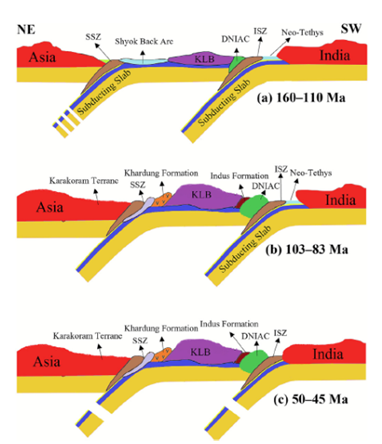
- Scientists have recently decoded the evolution of the Ladakh Magmatic Arc, revealing a detailed geological history spanning nearly 130 million years.
- It was formed due to the continuous subduction of the Neo-Tethys Oceanic Plate beneath the Eurasian Plate over millions of years.
- The arc developed during the long geological time period from the Jurassic to the Eocene epoch (approximately 201 to 34 million years ago).
- Important geological components of this arc include the Dras–Nidar Island Arc Complex and the Ladakh Batholith, which preserve valuable rock records.
- It shows three major phases of magmatic evolution, reflecting changing tectonic conditions and eventual collision with the Indian Plate.

Leave a Reply
Your Comment is awaiting moderation.