

PREVIOUS
✖
Narmada Valley Paleontological Discovery
November 22 , 2026
12 hrs 0 min
24
0
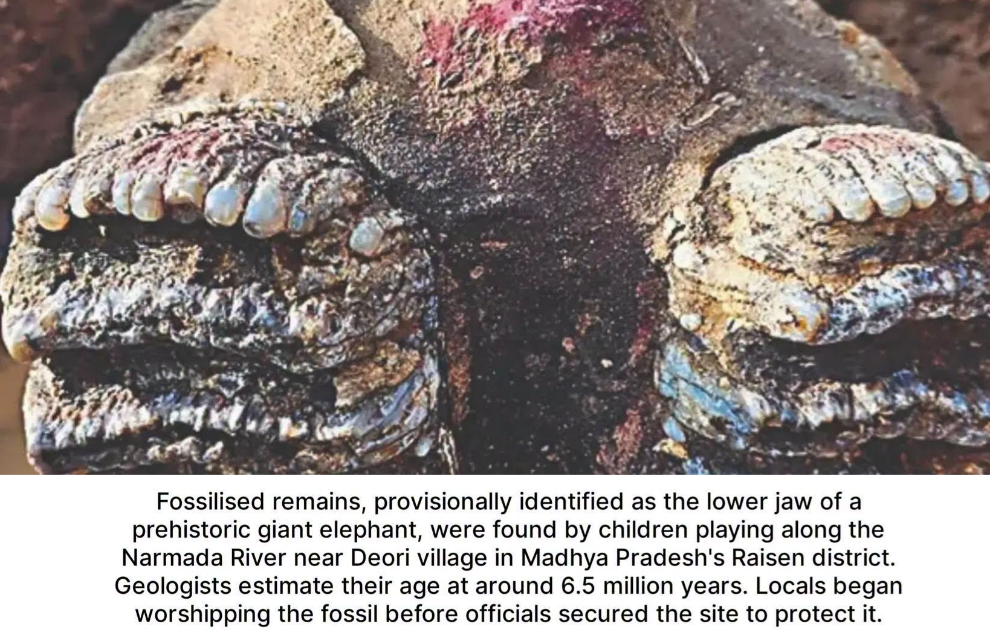
- A 75 cm-long fossilised jaw, preliminarily identified as belonging to the extinct elephant Palaeoloxodon namadicus, was exposed by river erosion at Patai Ghat along the Narmada River.
- Palaeoloxodon namadicus, also known as the Asian straight-tusked elephant, lived during the Middle to Late Pleistocene epoch, approximately 700,000 to 25,000–30,000 years ago.
- It is considered one of the largest land mammals ever to have lived, with an estimated height of 5–5.5 metres and weight of 18–22 tonnes.
- The species was first scientifically described in 1846 by British palaeontologists Hugh Falconer and Proby Cautley, based on fossils found in the Narmada Valley.
- It mainly inhabited river valleys, floodplains and woodlands of the Indian subcontinent.
- The discovery highlights the palaeontological importance of the Narmada Valley, which also yielded the Narmada Human fossil at Hathnora in 1982.

Leave a Reply
Your Comment is awaiting moderation.