

PREVIOUS
✖
New Alloy in Hiroshima Debris
August 5 , 2026
5 hrs 0 min
45
0
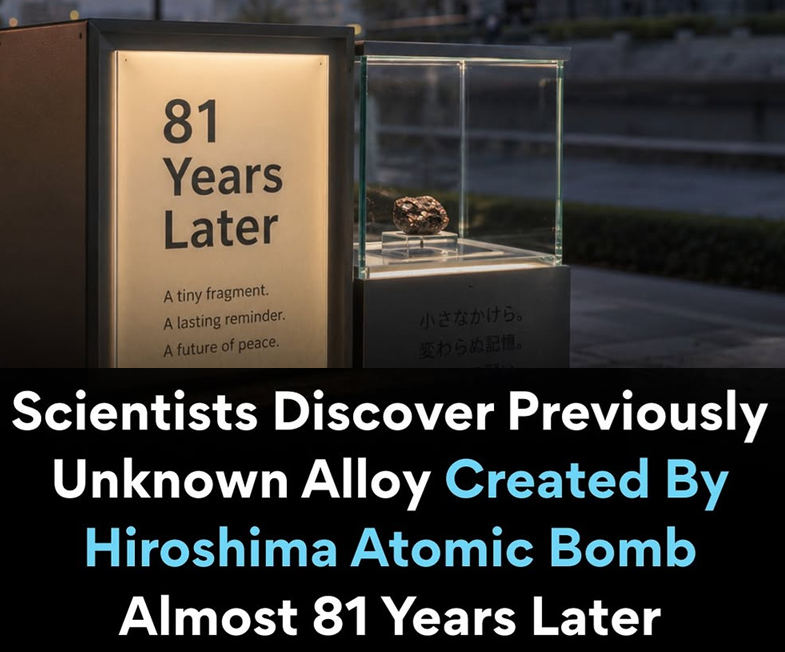
- Researchers discovered a previously unknown metal alloy inside glass-like hiros himaites recovered from Hiroshima Bay, Japan, formed after the 1945 atomic bomb blast.
- The alloy was found as a tiny metallic grain inside the beads and contains iron, chromium, nickel, manganese, molybdenum, silicon, and aluminium.
- Scientists believe it formed due to ultrafast quenching, where the nuclear blast’s extreme heat and rapid cooling created a unique structure.
- The alloy shows features similar to High-Entropy Alloys (HEAs) and quasicrystals, which are studied for their strength and stability.
- The discovery shows that nuclear explosion debris can preserve information about extreme physical and chemical conditions.

Leave a Reply
Your Comment is awaiting moderation.