

PREVIOUS
✖
No-Trust Motion Against Speaker
March 14 , 2026
14 hrs 0 min
17
0
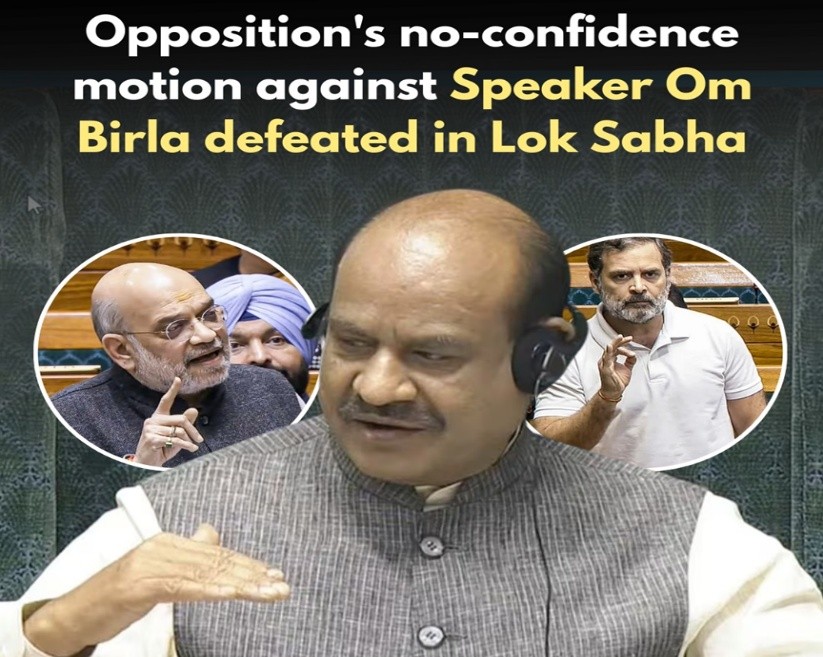
- The no-confidence motion brought by Opposition parties against Om Birla was dismissed by a voice vote.
- The Lok Sabha witnessed a 12-hour debate for this.
- The tradition has been that when a no-confidence motion is discussed against the Speaker, the Speaker does not occupy the Chair.
- These rare motions occurred in 1954 (against G.V. Mavalankar), 1966 (against Hukam Singh), and 1987 (against Balram Jakhar).
- In all these instances of a motion, the House was presided over for 14 days by other officers.
- The Speaker has stayed away from presiding over the Lok Sabha since the Motion of Removal against him was admitted in the first part of the Budget Session.
- BJP MP Jagdambika Pal was in the presiding officer during the debate.
- Pal sought the vote of the House, which rejected the motion by a voice vote.
- No division of votes was sought as the House was not in order.
- According to Article 94(c) under the Constitution, the Speaker can be removed only through a resolution passed by a majority of all the members of the Lok Sabha (Effective Majority), not merely those present and voting (Simple Majority).
- The process begins when a member submits a written notice to the Secretary-General of the Lok Sabha seeking removal.
- At least two Lok Sabha members have to sign the notice to move a resolution for the Speaker’s removal.
- Any number of members can sign the notice, but a minimum of two is mandatory.
- At least 14 days’ notice must be given before the motion can be taken up.
- Once admitted, the motion requires the support of at least 50 members to proceed for discussion in the House.
- The procedural framework governing this process is laid down in the Rules of Procedure and Conduct of Business in Lok Sabha, specifically Rules 200 to 203.
- The rules mandate that the resolution must clearly state the charges against the Speaker.
- During the debate on such a motion, the Speaker may participate in the proceedings as a member of the House.
- And while the Speaker can vote on the resolution in the first instance, he/she cannot exercise their vote in case of a tie.
- Article 96 of the Constitution bars a speaker or a Deputy Speaker from presiding over the House while a resolution for his removal from office is under consideration.
- The Speaker has a constitutional right to defend himself in the House if the resolution is discussed in the Lok Sabha.
- The language of the proposed resolution is usually examined by the deputy speaker, but since the present Lok Sabha does not have a deputy speaker, it may be examined by the senior-most member of the panel of chairpersons.
- The panel helps run the House in the Speaker’s absence.

Leave a Reply
Your Comment is awaiting moderation.