

PREVIOUS
✖
PCA and Indus Waters Treaty
September 6 , 2026
23 hrs 0 min
13
0
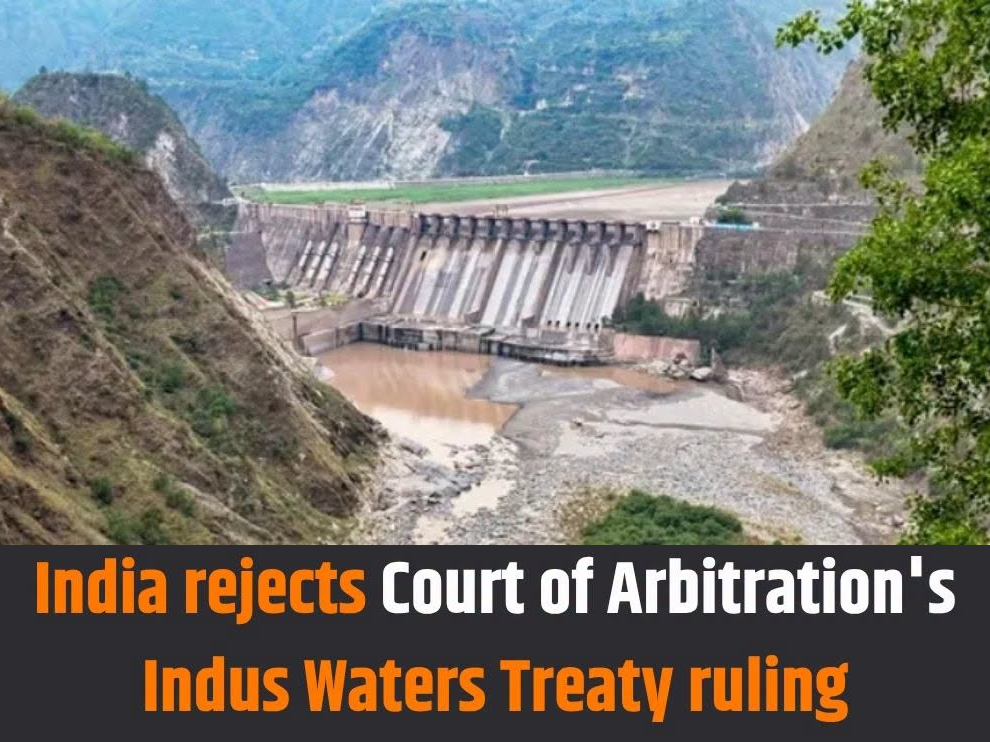
- India rejected the May 2026 award of the Permanent Court of Arbitration (PCA) on the maximum pondage (water storage capacity) allowed at Indian hydroelectric projects under the Indus Waters Treaty (IWT), 1960.
- The dispute concerns India’s Kishenganga (330 megawatt) and Ratle (850 megawatt) run-of-the-river hydroelectric projects in Jammu and Kashmir.
- Pakistan objected to the pondage and spillway designs, stating that they could affect the flow of water into Pakistan.
- India rejected the Court of Arbitration process, stating that it was illegally constituted because Pakistan pursued the Court of Arbitration and Neutral Expert mechanisms in parallel.
- The IWT was signed by India and Pakistan in 1960, with the World Bank as a signatory and facilitator.
- The Ravi, Beas and Sutlej are allocated to India, while the Indus, Jhelum and Chenab are largely allocated to Pakistan.
- India is allowed limited uses of the western rivers, including run-of-the-river hydroelectric power generation, subject to the treaty’s technical conditions.
- The IWT provides a three-stage dispute-resolution mechanism: Permanent Indus Commission, Neutral Expert and Court of Arbitration.
- India has maintained that the IWT is in abeyance following the 2025 Pahalgam terror attack and has not participated in the Court of Arbitration proceedings.
- The PCA was established in 1899 under the 1899 Convention for the Pacific Settlement of International Disputes to facilitate arbitration and peaceful settlement of international disputes.
- The PCA is an independent intergovernmental organisation, not a United Nations (UN) agency, but it has Permanent Observer status at the UN General Assembly.

Leave a Reply
Your Comment is awaiting moderation.