

PREVIOUS
✖
Nobel Prize for Physics -2026
October 8 , 2026
13 hrs 0 min
23
0
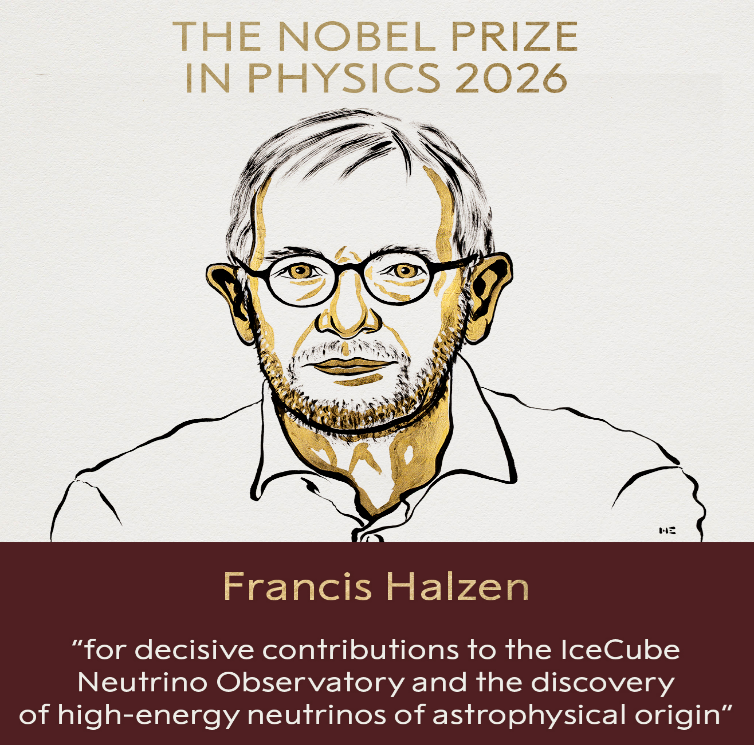
- Belgian-American physicist Francis Halzen won the 2026 Nobel Prize in Physics for his contributions to the IceCube neutrino observatory and the discovery of high-energy neutrinos of astrophysical origin.
- IceCube, located at the South Pole, Antarctica, covers about 1 cubic kilometre of ice and uses 5,160 optical sensors to detect neutrinos.
- Halzen first proposed the idea of detecting neutrinos at the South Pole in 1988; IceCube was completed in 2010.
- Researchers reported the first high-energy cosmic neutrinos in 2013 and traced one to a distant blazar in 2018.
- In India, neutrino research began with experiments at the Kolar Gold Fields (Karnataka), while the proposed India-based Neutrino Observatory (INO) was planned in Theni district, Tamil Nadu.

Leave a Reply
Your Comment is awaiting moderation.