

PREVIOUS
✖
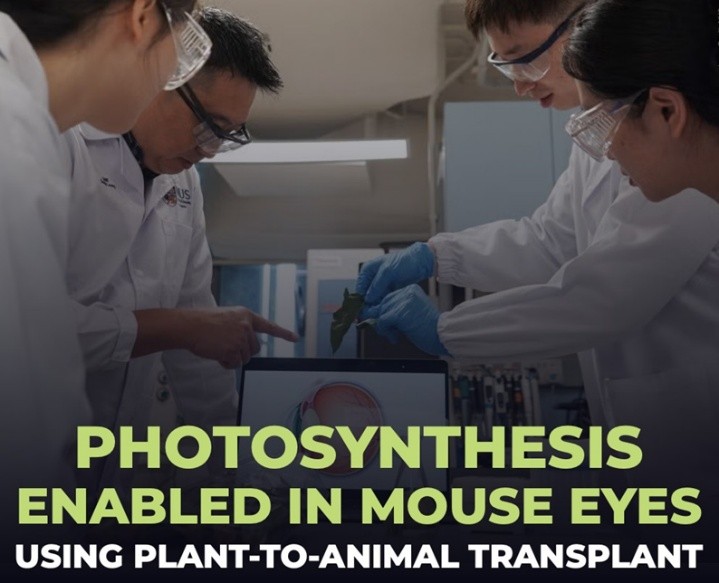
Photosynthesis in Mouse Eye Cells
June 4 , 2026
16 hrs 0 min
31
0
- Researchers have successfully demonstrated photosynthesis in mouse eye cells using a plant-derived nano-system called LEAF (Light-driven Engineered Artificial Thylakoid Factory).
- Researchers introduced chloroplast-derived structures into mouse corneal cells, enabling them to produce energy-related molecules under light exposure.
- LEAF functions as a temporary neo-organelle and generates ATP (Adenosine Triphosphate) and NADPH (Nicotinamide Adenine Dinucleotide Phosphate) using light energy.
- The study explored its use in treating dry eye disease (Keratoconjunctivitis Sicca).
- In preclinical mouse trials, LEAF therapy improved corneal health, increased tear film stability, and outperformed several standard treatments.

Leave a Reply
Your Comment is awaiting moderation.