

PREVIOUS
✖
Polymer Currency Notes in India
July 31 , 2026
13 hrs 0 min
26
0
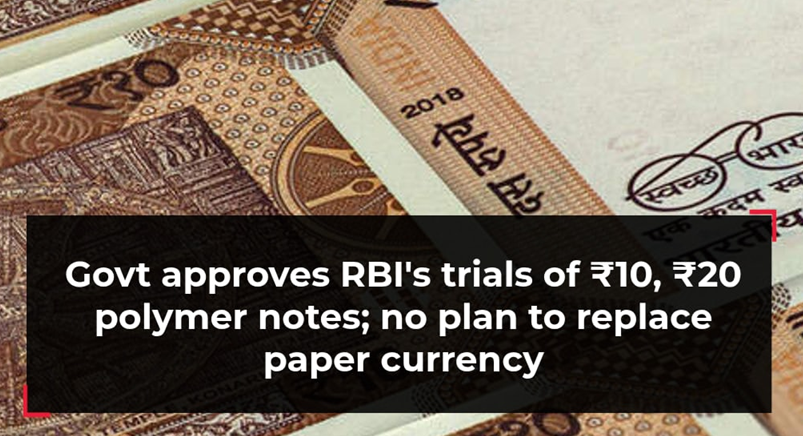
- The Reserve Bank of India is reviving plans to introduce polymer (plastic) currency notes, starting with a pilot project for ₹10 and ₹20 denominations.
- The RBI previously tested one billion ₹10 polymer notes across five cities (Chennai, Kochi, Mysore, Jaipur, and Shimla).
- Bharatiya Reserve Bank Note Mudran Private Limited (BRBNMPL), a wholly-owned subsidiary of the RBI, issued a global Expression of Interest (EOI) for the supply of Biaxially Oriented Polypropylene (BOPP)-based polymer substrate.
- Traditional Indian currency is made of 100% cotton-pulp paper.
- Australia was the first to introduce a full polymer banknote series in 1988.
- Polymer banknotes are more durable, water-resistant, tear-resistant, and difficult to counterfeit due to advanced security features such as transparent windows and embedded security elements.
- Many countries have found that the production cost alone was 20–24% of the currency’s value for low denominations.
- The supporters of plastic currency nevertheless say lower replacement frequency can justify the higher production cost.
- The Constitution of India places currency, coinage, legal tender, and foreign exchange under the exclusive legislative domain of the Union Government through the Union List.
- The Reserve Bank of India Act, 1934, provides the legal framework for the issuance and management of banknotes.
- The RBI announced the Clean Note Policy in 1999 to ensure the circulation of clean, good-quality currency notes and coins while withdrawing soiled and mutilated notes from circulation.
- The Coinage Act, 2011, governs the design, production, and circulation of coins issued by the Government of India.
- The Government of India is responsible for issuing the Rs 1 note.

Leave a Reply
Your Comment is awaiting moderation.