

PREVIOUS
✖
Southern Ocean Carbon ‘Anomaly’ Study
December 24 , 2025
14 hrs 0 min
31
0
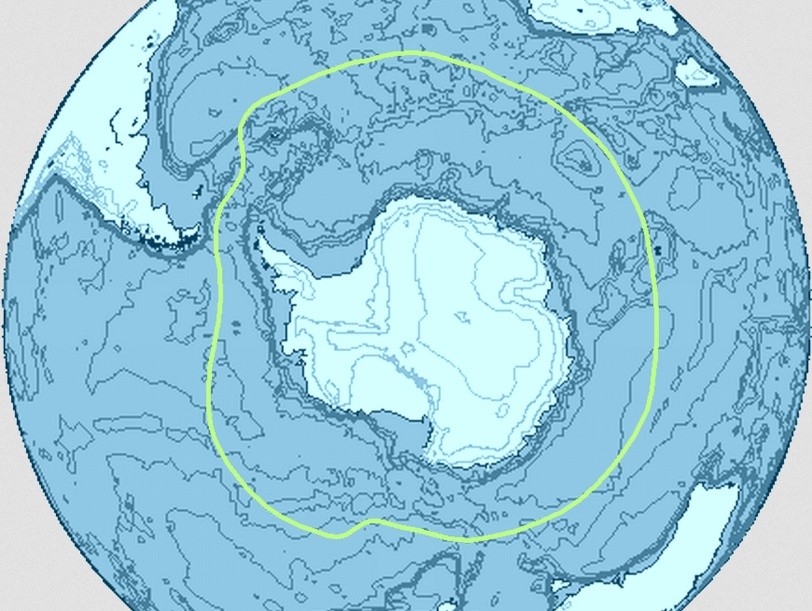
- The Southern Ocean surrounds Antarctica and covers about 25–30% of the global oceans.
- It absorbs roughly 40% of human-emitted oceanic carbon dioxide.
- Climate models predicted that stronger westerly winds and more greenhouse gases would bring carbon-rich deep water to the surface, releasing CO₂.
- Observations since the 2000s show the ocean is absorbing more carbon, contrary to model predictions.
- Freshwater from rainfall, sea ice transport, and glacial melt has strengthened surface stratification, trapping carbon-rich water 100–200 m below the surface.
- Deep waters have risen about 40 metres since the 1990s, increasing subsurface CO₂ pressure by ~10 micro atmospheres.
- The carbon sink may weaken if surface stratification thins, exposing deep CO₂-rich water to the atmosphere.

Leave a Reply
Your Comment is awaiting moderation.