

PREVIOUS
✖
Sustainable debt-GSDP ratio for Tamil Nadu
September 7 , 2026
15 hrs 0 min
28
0
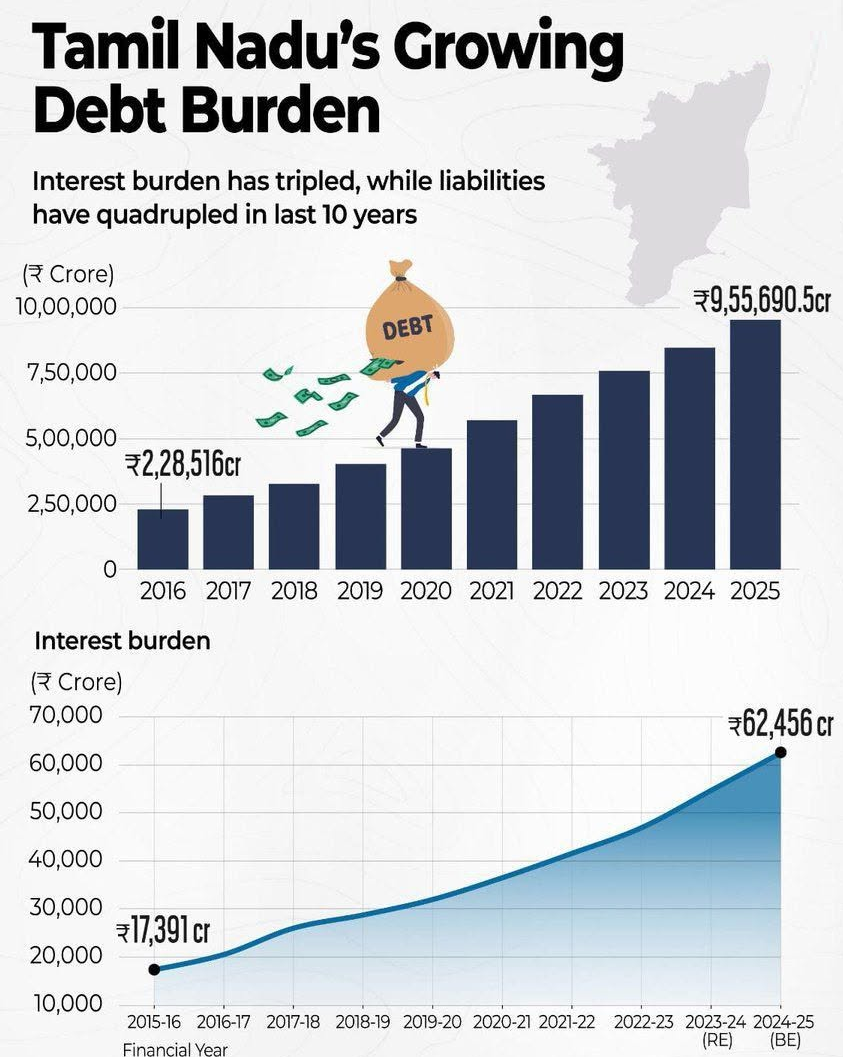
- The sustainable level of the debt-gross state domestic product (GSDP) ratio for the State is 23%.
- There is a demand for the reduction of the level from the existing 27%.
- The Fiscal Responsibility and Budget Management (FRBM) Committee headed by former civil servant N.K. Singh, in its report prepared in 2017, prescribed 20% as the prudent limit for the States in general.
- An allowance of an additional three percentage points can be provided for Tamil Nadu, considering the progress of macroeconomic factors in the last five-odd years.
- Emphasising that borrowing, per se, is not an undesirable activity, it is one of the major sources of financing development projects.
- When borrowed funds are invested in productive assets and infrastructure that generate economic growth and future income, the government will be able to service its debt with increased income.
- However, when the debt-GSDP ratio exceeds the prudent level, it becomes unsustainable, and the burden of debt servicing becomes excessive for the future,
- It is crowding out productive expenditure and pushing the government into a debt trap.
- The debt trap is a situation that is “bad for growth, development and stability.
- The debt issue is widespread in the country and not confined only to Tamil Nadu.
- Only three States – Gujarat, Odisha, and Maharashtra – have debt-GSDP ratios below the 20% mark.
- While all others have crossed the threshold, nine States – Andhra Pradesh, Bihar, Kerala, Madhya Pradesh, Punjab, Rajasthan, Telangana, Uttar Pradesh, and West Bengal – have higher ratios than that of Tamil Nadu.
- Like in most other States, the debt-GSDP ratio in Tamil Nadu shot up in the COVID-19 pandemic year (2020-21), from which it has not been able to stage a comeback.
- In 2019-20, it was 22.78%.
- The next year, it rose to 28.67%.
- It has been hovering in the range of 28% to 26% since then.
- Though appreciative of Tamil Nadu for being able to keep its fiscal deficit at 3% of the GSDP, the revenue deficit (the excess of revenue expenditure over revenue receipts) is about 1.4% of the GSDP.
- It means that nearly 50% of the borrowed money is spent on consumption and not on investment.
- To reach the sustainable level of a debt-GSDP ratio of 23% around 2050-51, the State should achieve 15% nominal economic growth annually and keep the fiscal deficit at 3%.
- If it wants to attain the level faster, it should, at least, reduce the fiscal deficit.
- For example, assuming the State is able to keep the fiscal deficit at 2.5% with 14% nominal economic growth, it can reach 23% by 2033-34.
- By strongly advocating expenditure rationalisation, the government should not hesitate to drop outdated and unproductive welfare schemes.

Leave a Reply
Your Comment is awaiting moderation.