

PREVIOUS
✖
Tibetan Plateau Formation
July 20 , 2026
18 hrs 0 min
33
0
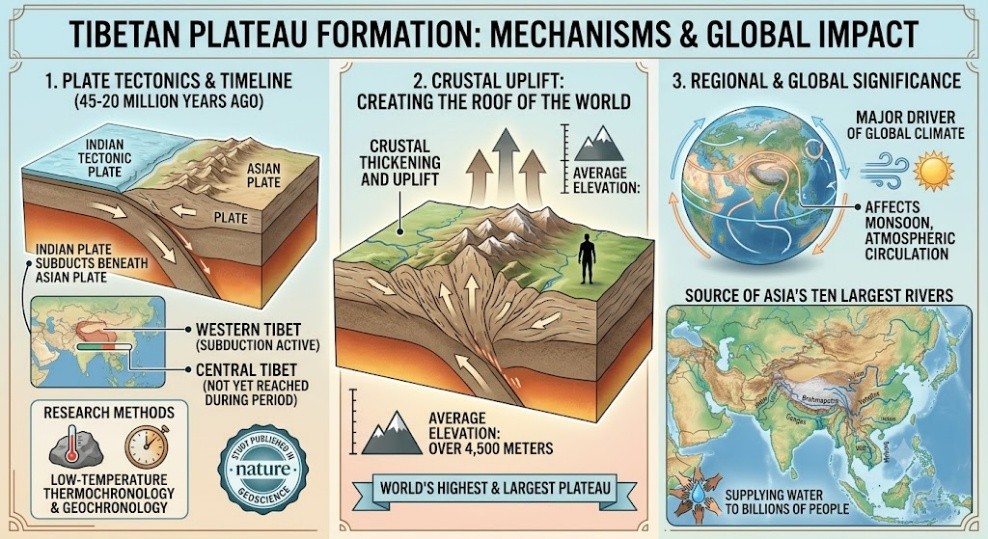
- A study published in Nature Geoscience explains how the Indian tectonic plate helped form the Tibetan Plateau, known as the "Roof of the World."
- Researchers found that the Indian plate moved beneath the Asian plate in western Tibet between 45 and 20 million years ago, but had not yet reached central Tibet during that period.
- The study used low-temperature thermochronology and geochronology to reconstruct the plateau's geological history and uplift.
- The Tibetan Plateau is the world's highest and largest plateau, with an average elevation of over 4,500 metres.
- It acts as a major driver of the global climate and is the source of Asia's ten largest rivers, supplying water to billions of people.

Leave a Reply
Your Comment is awaiting moderation.