

PREVIOUS
✖
UN Report on Warming Overshoot
September 4 , 2026
12 hrs 0 min
16
0
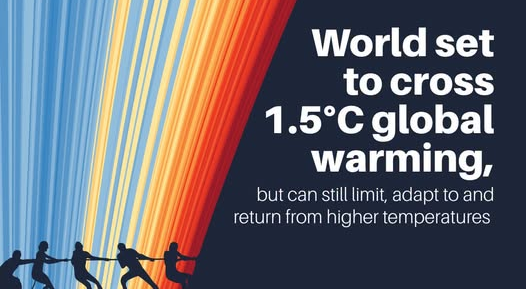
- A landmark United Nations (UN) report warns that the world is likely to cross the 1.5°C global warming limit by around 2030, but temporary overshoot can still be reversed later this century.
- The Paris Agreement (2015) aims to keep global warming well below 2°C and pursue efforts to limit it to 1.5°C above pre-industrial levels.
- The world is already about 1.4°C warmer than pre-industrial levels, and crossing 1.5°C could increase extreme weather, sea-level rise, biodiversity loss, and other climate risks.
- With rapid fossil fuel phase-out and emission cuts, warming could potentially be limited to around 1.8°C, followed by carbon removal to bring temperatures back to 1.5°C or below.
- Carbon dioxide removal could involve tree planting and ecosystem restoration, while technologies such as rock weathering and ocean alkalinity enhancement are still not proven at large scale.
- The report stresses urgent emission reductions, international cooperation, climate finance, and strong political action to keep the 1.5°C goal within reach.

Leave a Reply
Your Comment is awaiting moderation.