

PREVIOUS
✖
Unusual Black Hole Discovery
August 20 , 2026
12 hrs 0 min
13
0
- An international team of astronomers found an unusual black hole from when the universe was about 660 million years old, using the James Webb Space Telescope (JWST).
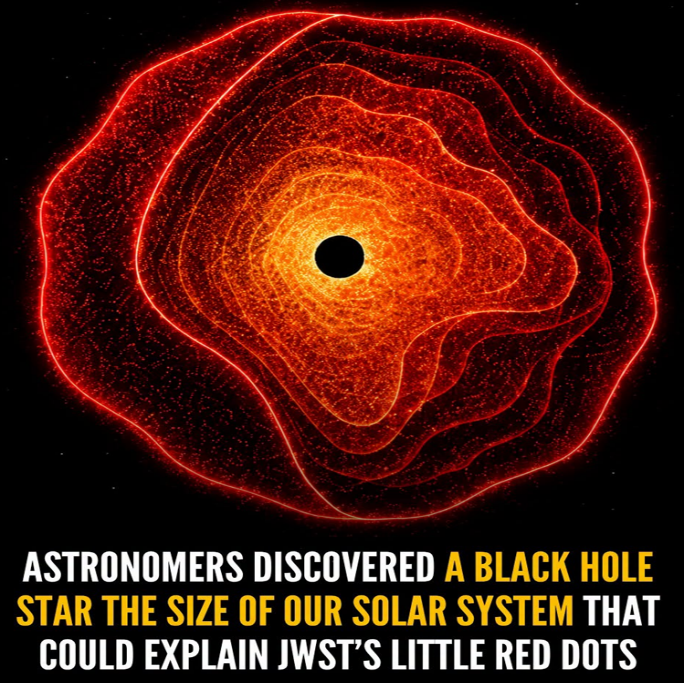
- The object is one of the Little Red Dots (LRDs) and appears to be a rapidly growing black hole surrounded by a huge cocoon of hydrogen gas.
- The observations suggest that the red colour may be caused by dense gas, rather than dust as previously thought.
- The gas cocoon may help explain how some black holes grew very rapidly in the early universe.
- The black hole is estimated to be surrounded by hydrogen gas with about 100 billion particles per cubic centimetre, extending several million kilometres around it.

Leave a Reply
Your Comment is awaiting moderation.