

PREVIOUS
✖
World’s top methane hotspots
August 1 , 2026
10 hrs 0 min
55
0
- Greenhouse gas (GHG) emissions from paddy fields worldwide have doubled since the 1960s.
- The paddy fields around the world produced around 1.1 billion tonnes of carbon dioxide-equivalent (CO2-e) emissions every year — a 90.4% increase from the annual emissions between 1961 and 1980.
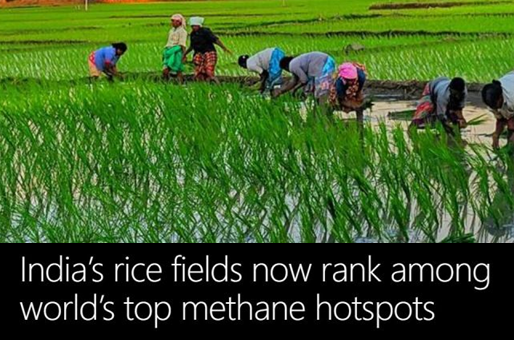
- India’s rice fields now rank among the world’s top methane hotspots.
- It was exceeding Germany’s total yearly methane emissions.
- And paddy fields in eastern India were among the global methane hotspots.
- Apart from soil organic carbon, methane from paddy fields was also a significant driver of emissions.
- Flooded fields develop low-oxygen conditions where methane-producing microbes thrive.
- India tops the list of countries on rice production, delivering 154 million tonnes in 2025-26.
- The area under paddy cultivation has also increased by around 25% since the 1970s, and currently covers 55% of India’s rainfed harvested area.

Leave a Reply
Your Comment is awaiting moderation.