

PREVIOUS
✖
Antarctic Ozone Hole 2026
November 20 , 2026
11 hrs 0 min
31
0
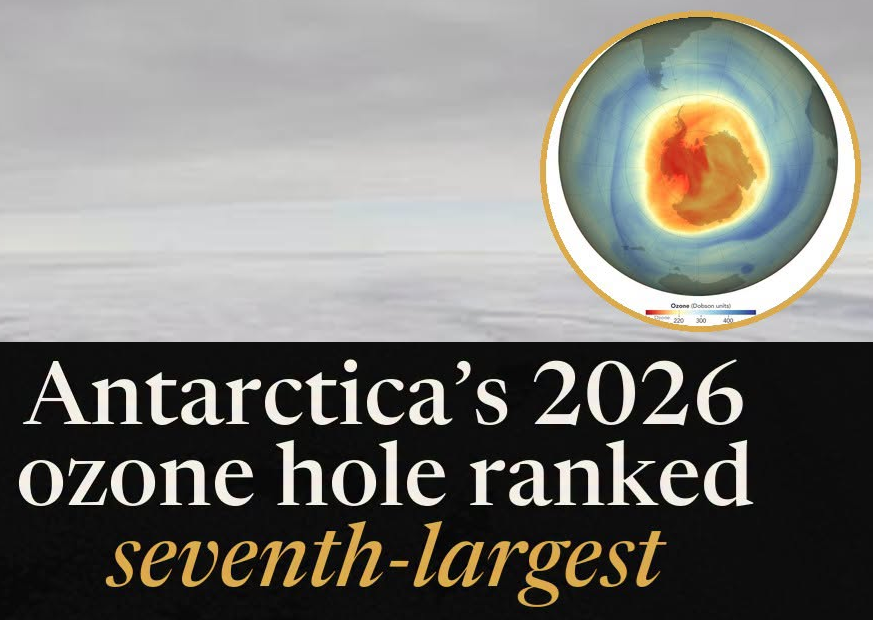
- The 2026 Antarctic ozone hole was ranked the seventh largest in 48 years of monitoring by NASA and the National Oceanic and Atmospheric Administration (NOAA).
- The Antarctic ozone hole is a seasonal thinning of the ozone layer over Antarctica, mainly occurring during the Southern Hemisphere spring (August–November).
- It forms due to ozone-depleting substances such as chlorofluorocarbons (CFCs), which release chlorine that destroys ozone molecules in the stratosphere.
- An unusually powerful polar vortex and extreme weather contributed to its large size.
- The 1987 Montreal Protocol has helped reduce ozone-depleting substances and supports long-term ozone-layer recovery.

Leave a Reply
Your Comment is awaiting moderation.