

PREVIOUS
✖
Antarctic Ozone Hole 2026
September 18 , 2026
13 hrs 0 min
70
0
- The 2026 Antarctic ozone hole reached 15 million km² by the end of August, slightly earlier than average, according to Copernicus Atmosphere Monitoring Service (CAMS).
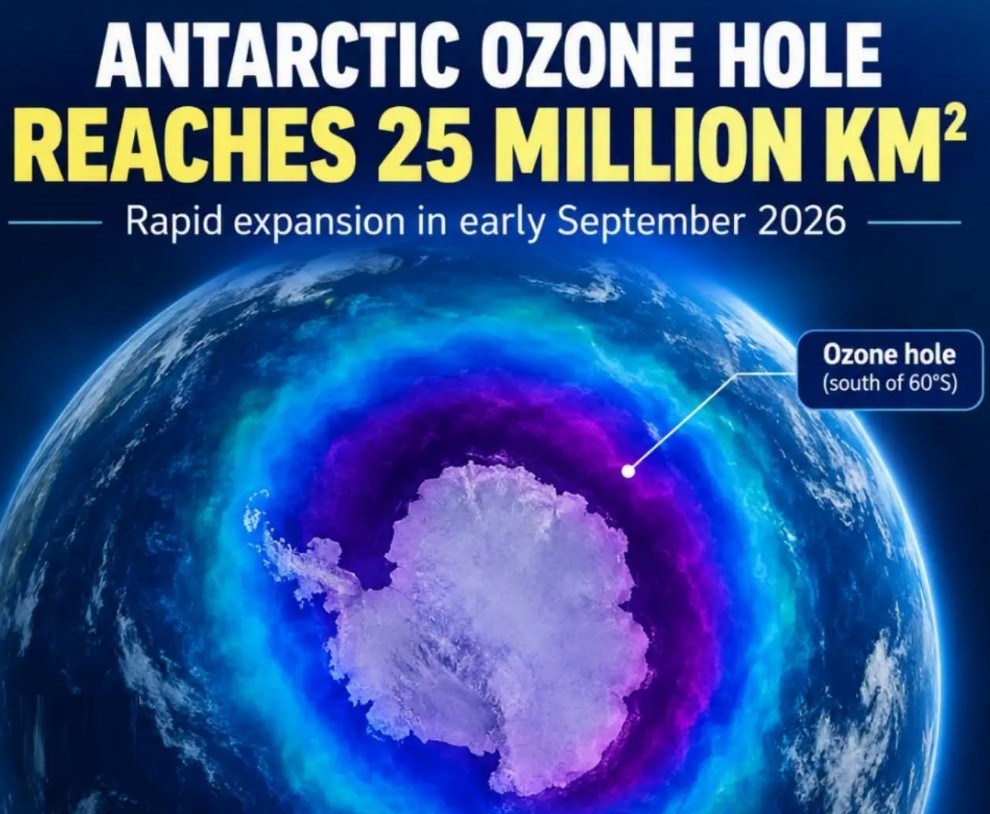
- It expanded sharply to about 25 million km² on September 12, around 5 million km² above the average for that period.
- The rapid growth coincided with a sudden fall in stratospheric temperature at about 20 km above the South Pole.
- Cold temperatures form Polar Stratospheric Clouds (PSCs), which support chemical ozone depletion by halogens during austral spring.
- Other indicators, including minimum ozone column value and ozone mass deficit, remained close to average levels.
- The ozone hole forms annually over Antarctica during August–November, with recent years showing smaller and shorter-lived holes.

Leave a Reply
Your Comment is awaiting moderation.