

PREVIOUS
✖
Birth of British Hill Stations
September 15 , 2026
13 hrs 0 min
22
0
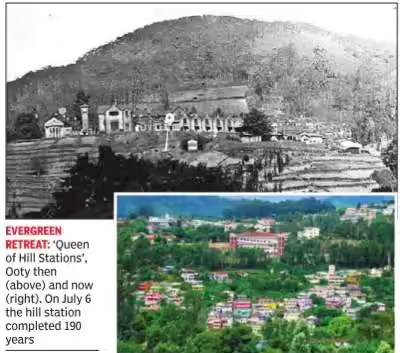
- Sir Thomas Munro’s visit to Ootacamund (Ooty) on 29 September 1826 helped lead to the formation of the first hill station of the British Raj in the Nilgiri Hills.
- Munro was the Governor of the Madras Presidency from 1820 to 1827 and visited Ooty at the invitation of John Sullivan, Collector of Coimbatore.
- During the visit, Munro reached the summit of Doddabetta, the highest peak in the Nilgiri Hills, and recorded the landscape and Kurinji flowers of the region.
- He later recommended to the East India Company that the Nilgiris be developed as a hill station, partly as a place where sick British officials and soldiers could recover instead of travelling to Europe.
- The Madras Government accepted his recommendation on 6 July 1827, the same day Munro died of cholera in Andhra Pradesh.
- Munro’s visit also helped bring the postal system to the Nilgiris at an early stage.
- Munro introduced the Ryotwari system in the Madras Presidency, which dealt directly with cultivators instead of Zamindars and middlemen.
- He also helped shape the modern district administration and initiated a major statistical survey of indigenous education in the Madras Presidency in 1822.

Leave a Reply
Your Comment is awaiting moderation.