

PREVIOUS
✖
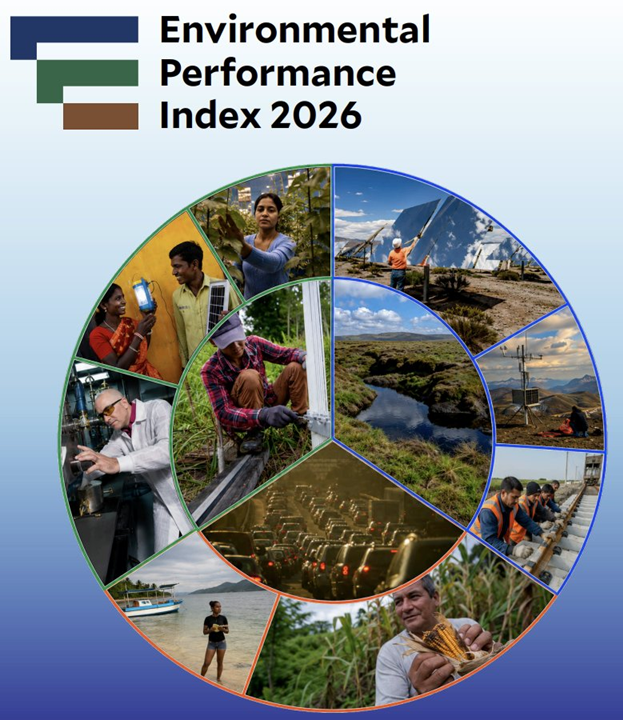
Environmental Performance Index (EPI) 2026
August 6 , 2026
73 days
583
0
- It is a data-driven global benchmark.
- It serves as a vital analytical tool for evaluating national progress toward achieving global sustainability targets, such as the UN Sustainable Development Goals and Paris Climate Agreement objectives.
- It was developed by Institutes of Yale and Columbia University, along with support from the McCall MacBain Foundation.
- Its coverage will be 177 nations, 47 indicators, and 12 issue categories under three core objectives.
- Three core policy objectives are Environmental Health, Ecosystem Vitality, and Climate Change.
Environmental Health
- Air quality (measuring exposure to pollutants like PM2.5).
- Sanitation and drinking water.
- Heavy metals exposure.
Ecosystem Vitality
- Biodiversity and habitat protection.
- Forests and tree cover loss.
- Fisheries and fish stocks.
- Agriculture and sustainable practices.
- Water resources and wastewater treatment.
Climate Change
- Greenhouse gas emissions mitigation.
- CO2 emissions from various sectors.
- Clean energy transition and tracking carbon intensity.
- Top Ranks – Estonia (1st, score 74.79); followed by Luxembourg, UK, Finland, Netherlands (Top 5 – All from Europe).
- India is at 176th (score 22.46), the second lowest; severe air quality and biodiversity loss.
- India has remained among the five worst-performing countries in the EPI since 2022.
- India performed poorly in Environmental Health, Air Quality, and Biodiversity (ranked 174th in both Air Quality and Biodiversity).

Leave a Reply
Your Comment is awaiting moderation.