

PREVIOUS
✖
Justice Yashwant Varma Resignation
April 13 , 2026
173 days
586
0
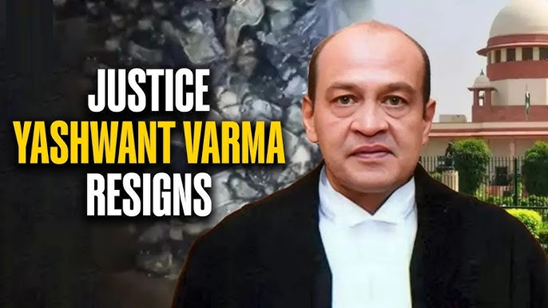
- Allahabad High Court (HC) Justice Yashwant Varma resigned amid parliamentary impeachment proceedings for his removal in New Delhi.
- He submitted his resignation to the President of India, Droupadi Murmu.
- He also withdrew from the Judges Inquiry Committee constituted by the Lok Sabha Speaker Om Birla under the Judges (Inquiry) Act, 1968, calling it an “unfair” inquiry.
- The Supreme Court (SC) also dismissed his petitions challenging the inquiry process and removal proceedings.
- Removal of High Court (HC) Judges: Under Article 218 of the Constitution of India, read with Article 124(4), a judge can be removed only on grounds of proven misbehaviour or incapacity.
- The Judges (Inquiry) Act, 1968, provides that removal requires a motion in Parliament signed by at least 100 Members of Parliament (MPs) in Lok Sabha or 50 MPs in Rajya Sabha.
- This should be followed by an inquiry committee and final approval by a special majority in both Houses.
- Upon resignation, a judge is entitled to the same pensionary benefits as a judge who superannuates from service.
- With his resignation, the future course of action over allegations levelled against him enters uncharted territory.
- However, while the threat of an impeachment motion ends, other legal methods could still be looked at by the government but that may require assent of the judiciary.
- For any court to take cognisance of an offence by a judge (for actions from the time that he held office), the Chief Justice of India would be required to grant sanction for prosecution.

Leave a Reply
Your Comment is awaiting moderation.