

PREVIOUS
✖
Neptune’s Ancient Celestial Collision
August 8 , 2026
77 days
402
0
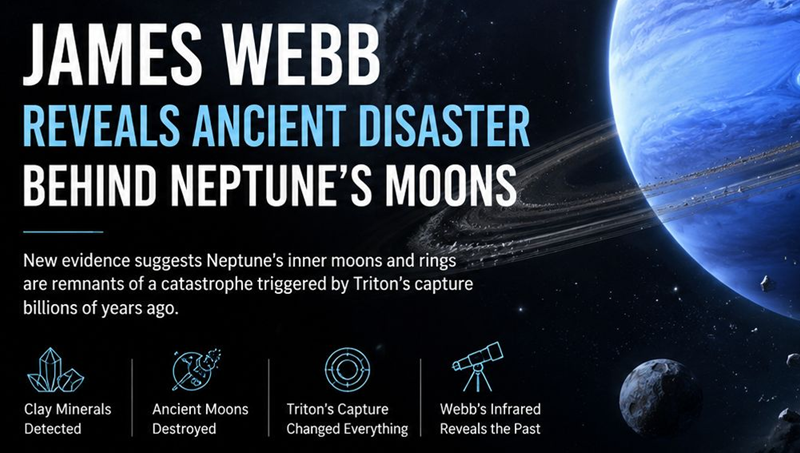
- NASA’s James Webb Space Telescope found evidence of an ancient catastrophic event that reshaped Neptune’s moons and rings billions of years ago.
- The telescope detected clay minerals on Neptune’s inner moons — Proteus, Larissa and Galatea — indicating material from a larger destroyed celestial body.
- Scientists suggest that Triton, Neptune’s largest moon, was captured from the Kuiper Belt and caused collisions among Neptune’s original moons.
- The debris from these collisions later formed Neptune’s present inner moons and rings.
- Triton is the only large moon in the Solar System that orbits opposite to its planet’s rotation, supporting the theory that it was captured.

Leave a Reply
Your Comment is awaiting moderation.