

PREVIOUS
✖
Pithora Painting - Gujarat
August 8 , 2026
60 days
440
0
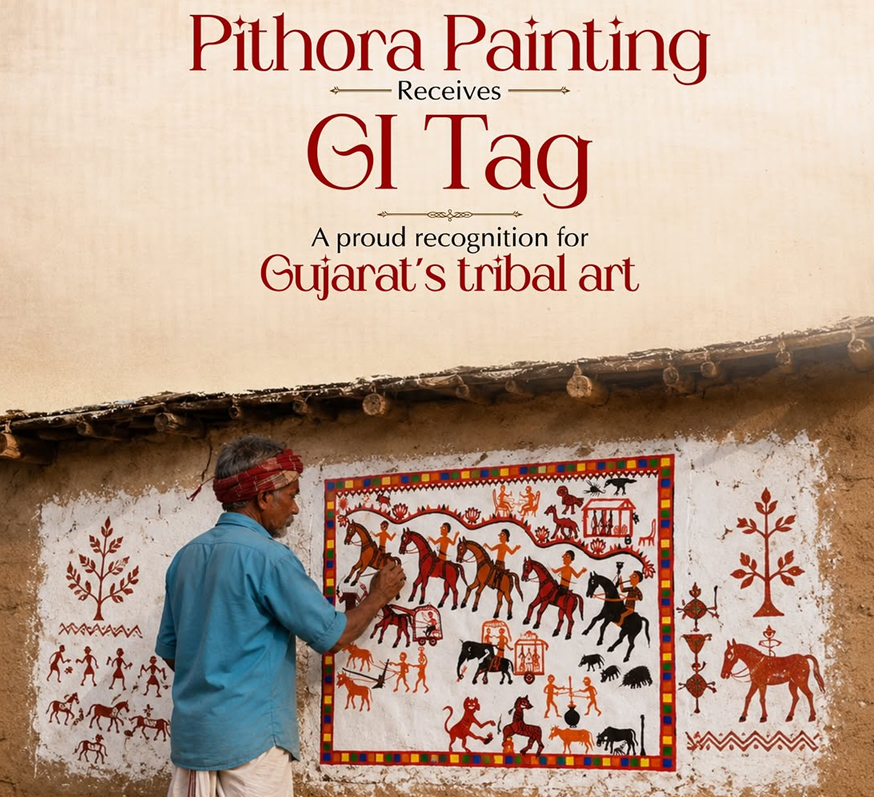
- It is the centuries-old wall art tradition of Gujarat’s Rathwa tribal community.
- It is mainly in Panch mahal and Chhota Udaipur.
- It dates back to around the 13th century - done by tribes such as the Rathwa, Bhil, and Bhilala.
- It was created on the walls of homes.
- The paintings were often commissioned during significant life events, such as weddings, births, and festivals.
- These were executed by specialist ritual painters known as Lakharas, under the guidance of a priest called Badwa.
- The walls are prepared by applying a mixture of cow dung and clay
- Artists use natural pigments derived from minerals, plants, and other organic materials to create the colours for their paintings
- Painters use a combination of bamboo sticks, cotton and wooden stencils.
- The paintings show tribal and Hindu deities, horses, animals, and scenes from daily life like farming, hunting, and dancing.
- Common colours include red, yellow, green, and blue, each derived from specific natural sources.
- Today’s generation of Pithora painters use paper and canvas that they sell commercially.

Leave a Reply
Your Comment is awaiting moderation.