

PREVIOUS
✖
Vande Mataram – Proposal for Legal Protection
May 9 , 2026
171 days
864
0
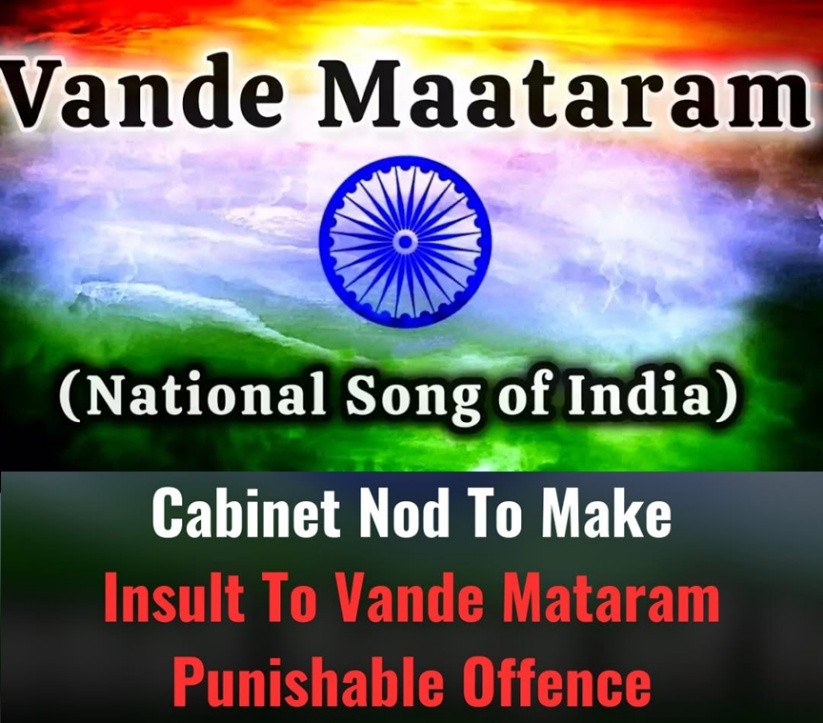
- The Union Cabinet has proposed amending the Prevention of Insults to National Honour Act, 1971, to extend legal protection to Vande Mataram, similar to the National Anthem.
- The proposed amendment aims to provide Vande Mataram the same legal protection as Jana Gana Mana (National Anthem).
- It seeks to make any insult or obstruction to the singing of Vande Mataram a punishable offence.
- At present, the Prevention of Insults to National Honour Act, 1971 penalises disrespect to the National Flag, the Constitution of India, and the National Anthem.
- Under the existing law, intentional disrespect to these symbols is punishable with imprisonment up to three years, a fine, or both.
- There is currently no specific legal provision under the Act for the protection of the National Song Vande Mataram.
- Vande Mataram was written by Bankim Chandra Chattopadhyay and published in his novel Anandamath in 1882.
- The novel Anandamath is set against the backdrop of the Sannyasi Rebellion in the late 18th century.
- In 1937, the Indian National Congress (INC) adopted the first two stanzas of Vande Mataram for official use.
- The Constitution of India accorded Vande Mataram the status of the National Song.
- The Union Ministry of Home Affairs (MHA) issued instructions stating that all six stanzas (around three minutes) may be sung or played at official events.
- The MHA also stated that the National Song should be given precedence before the National Anthem in events where both are played.
- However, the MHA guidelines are advisory in nature and do not have statutory backing.

Leave a Reply
Your Comment is awaiting moderation.