

PREVIOUS
✖
A23a Iceberg Disintegration
July 24 , 2026
58 days
240
0
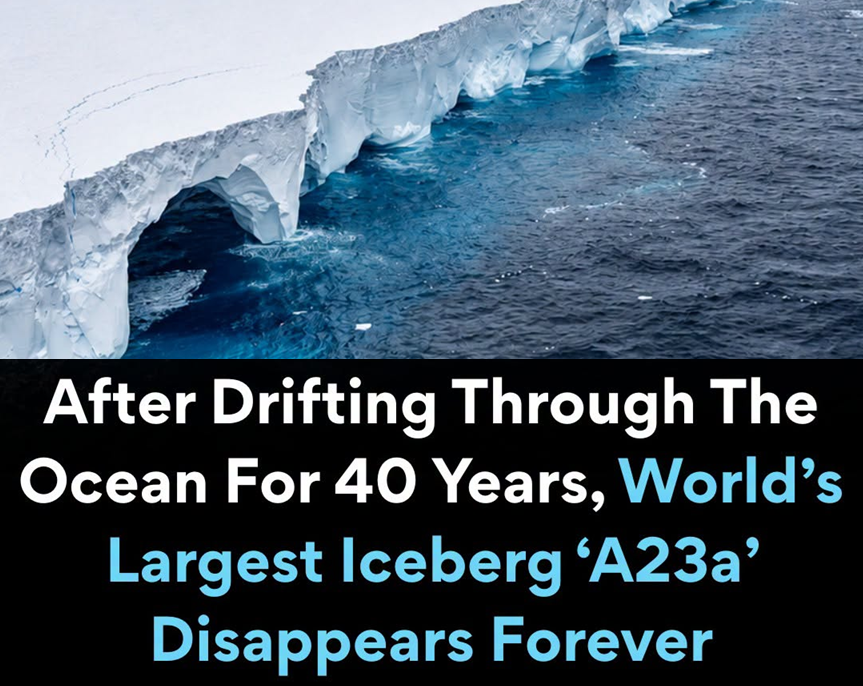
- The world’s largest iceberg, A23a, has broken into smaller fragments in the South Atlantic Ocean after drifting for nearly 40 years.
- A23a calved from the Filchner-Ronne Ice Shelf, Antarctica, in 1986 and remained grounded on the ocean floor for decades before beginning its long drift.
- It covered an area of around 3,900 sq km at its peak, making it one of the largest icebergs ever recorded and larger than many cities.
- The iceberg drifted through the Weddell Sea and later entered the South Atlantic, where warmer waters accelerated melting and fragmentation.
- Its breakup was caused by prolonged exposure to warmer ocean currents, wave action and meltwater, reflecting changes in Antarctic environments.

Leave a Reply
Your Comment is awaiting moderation.